The advisor knew the answer. The software got in the way.
Financial advisors carry decades of pattern recognition — the kind of expertise that wins trust in a room. But their presentation software forced them to narrate around its limitations instead of through their insights.
Client meetings are where relationships are built or lost. The moment an advisor breaks eye contact to hunt for the next chart, the room shifts. Confidence leaks. The tool that was supposed to support the conversation was interrupting it.
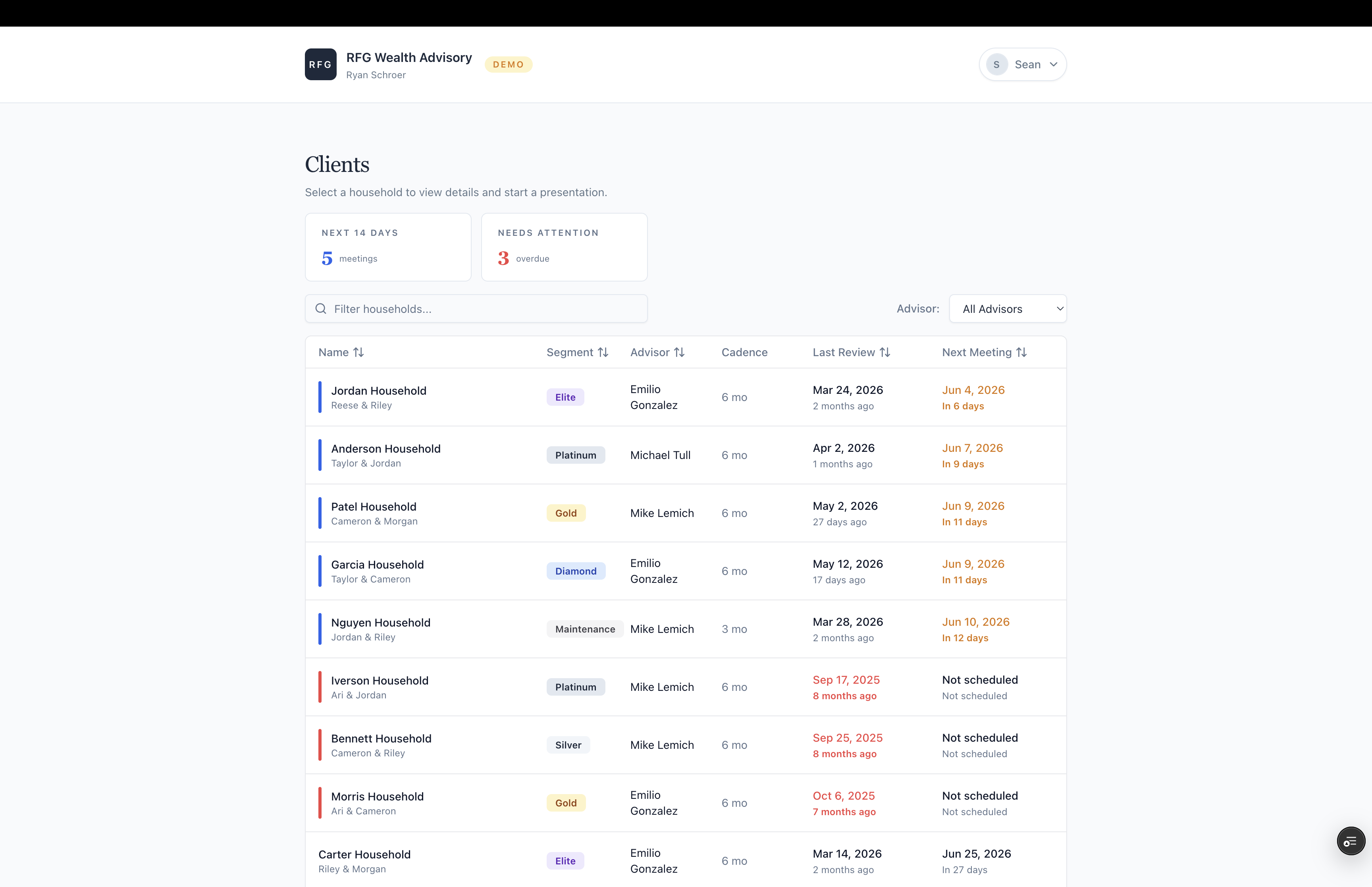
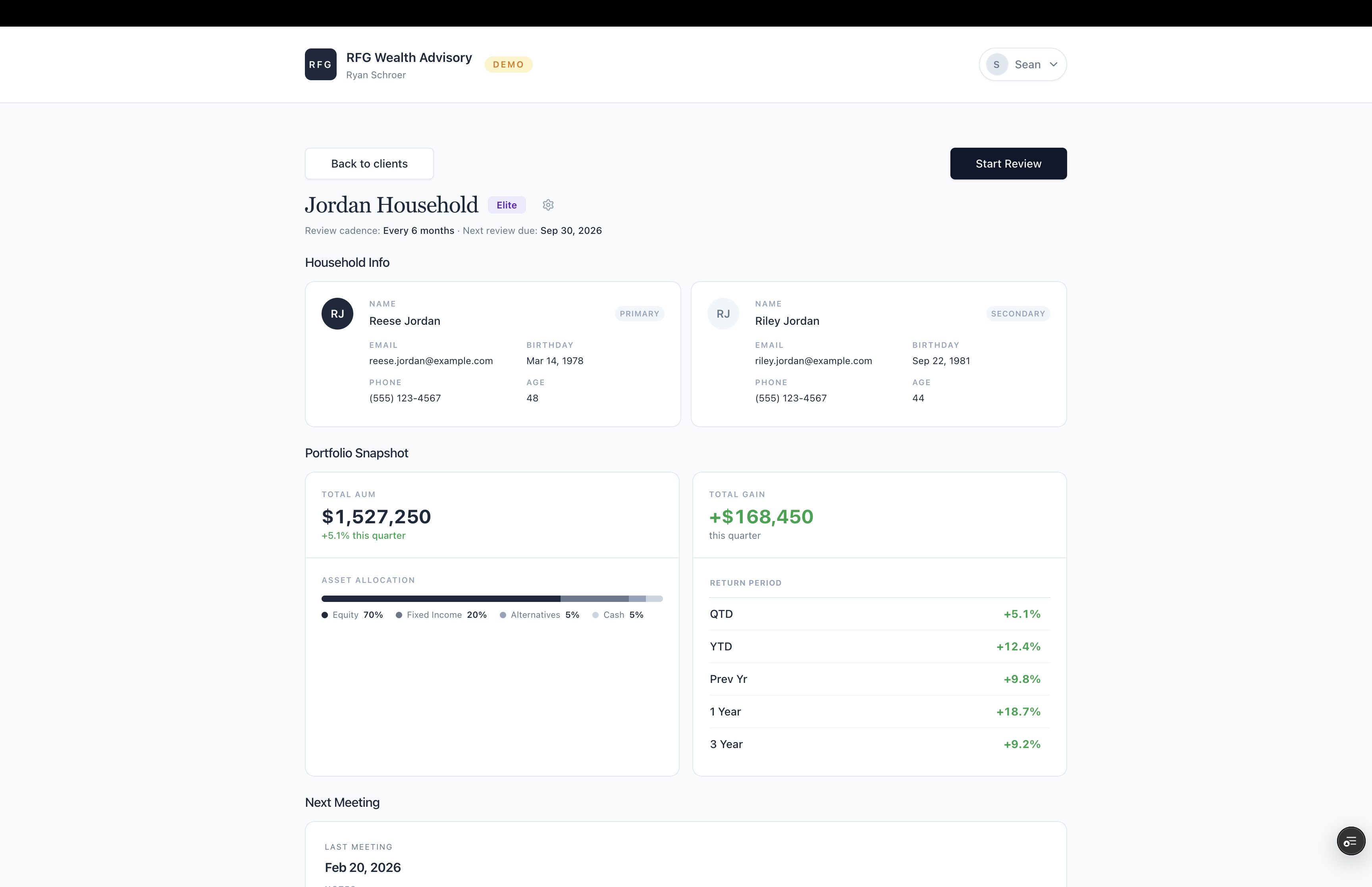
”The pause between slides is where you lose them.”
I sat with advisors during real client meetings. The friction wasn’t where anyone expected. It wasn’t the data visualization. It wasn’t the portfolio logic. It was the transitions — the dead air between slides where an advisor lost their thread and the client’s attention drifted.
Every click away from the conversation was a micro-interruption. Advisors had developed elaborate workarounds — pre-loading tabs, memorizing slide orders, printing backup sheets — all compensating for a tool that couldn’t keep up with the pace of a real conversation.
Kill the slides. Build a scroll.
The temptation was to fix the slides — better transitions, smarter navigation, faster loading. I rejected that. The slide paradigm itself was the problem. Each click was a hard stop: a moment where the advisor’s attention left the client and went to the screen. No amount of polish fixes a structural interruption.
The redesign eliminated slides entirely. Portfolio views flow as a single scrollable narrative. Data appears in context, not in isolation. Charts and allocations are spatially organized so the advisor’s peripheral vision can anticipate what’s next. The advisor moves through the story at conversation speed — not click speed.
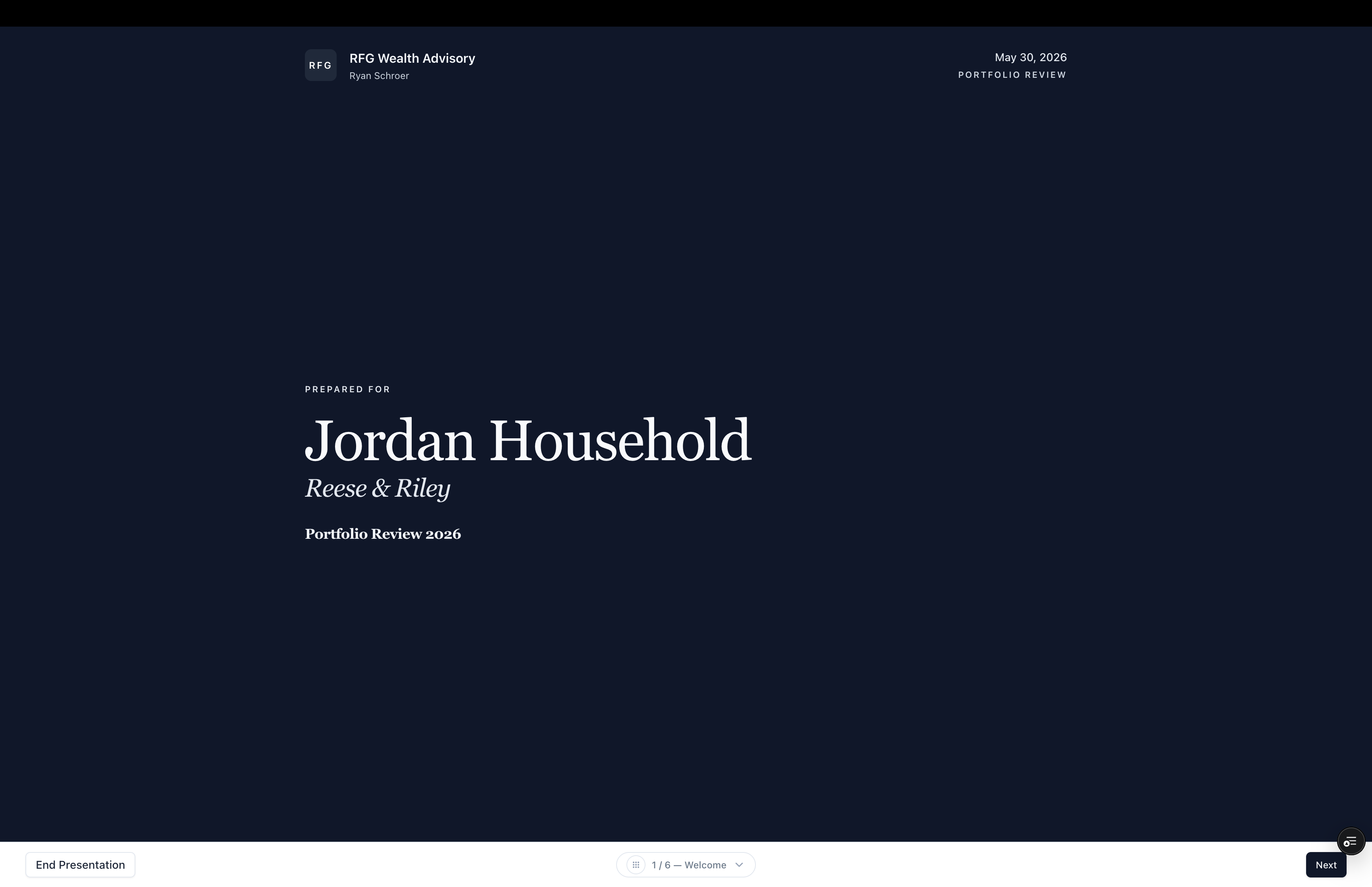
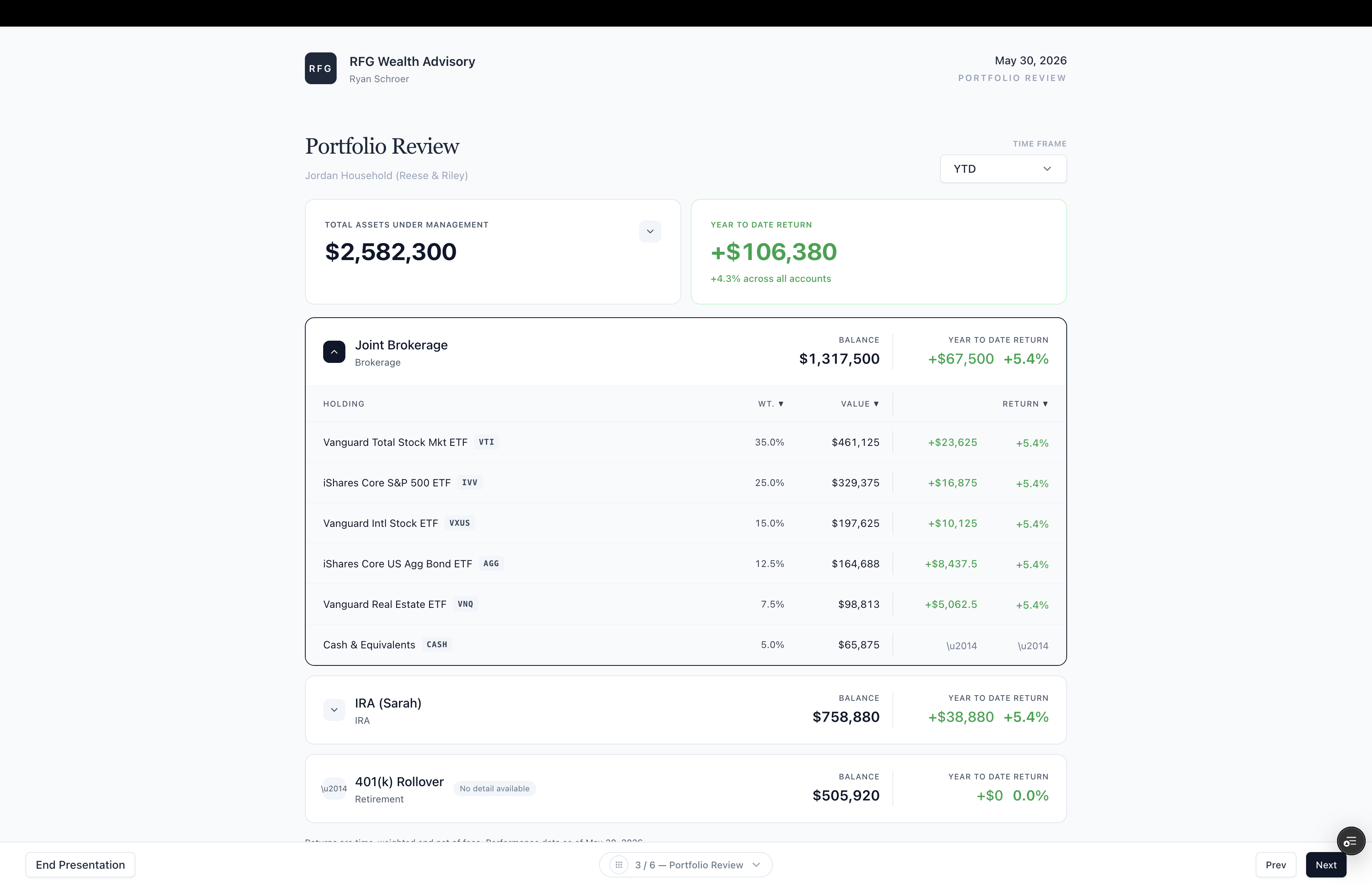
One system. Every meeting type.
The design system had to flex across portfolio reviews, prospect presentations, and planning sessions — without requiring the advisor to learn three different interfaces. Components were designed for composability: the same data modules arrange differently depending on the meeting context.
Typography and color were tuned for projection environments — high contrast, generous sizing, minimal visual noise. Charts prioritize legibility at distance over density at the desk. Every component was tested in the room it would actually be used in.
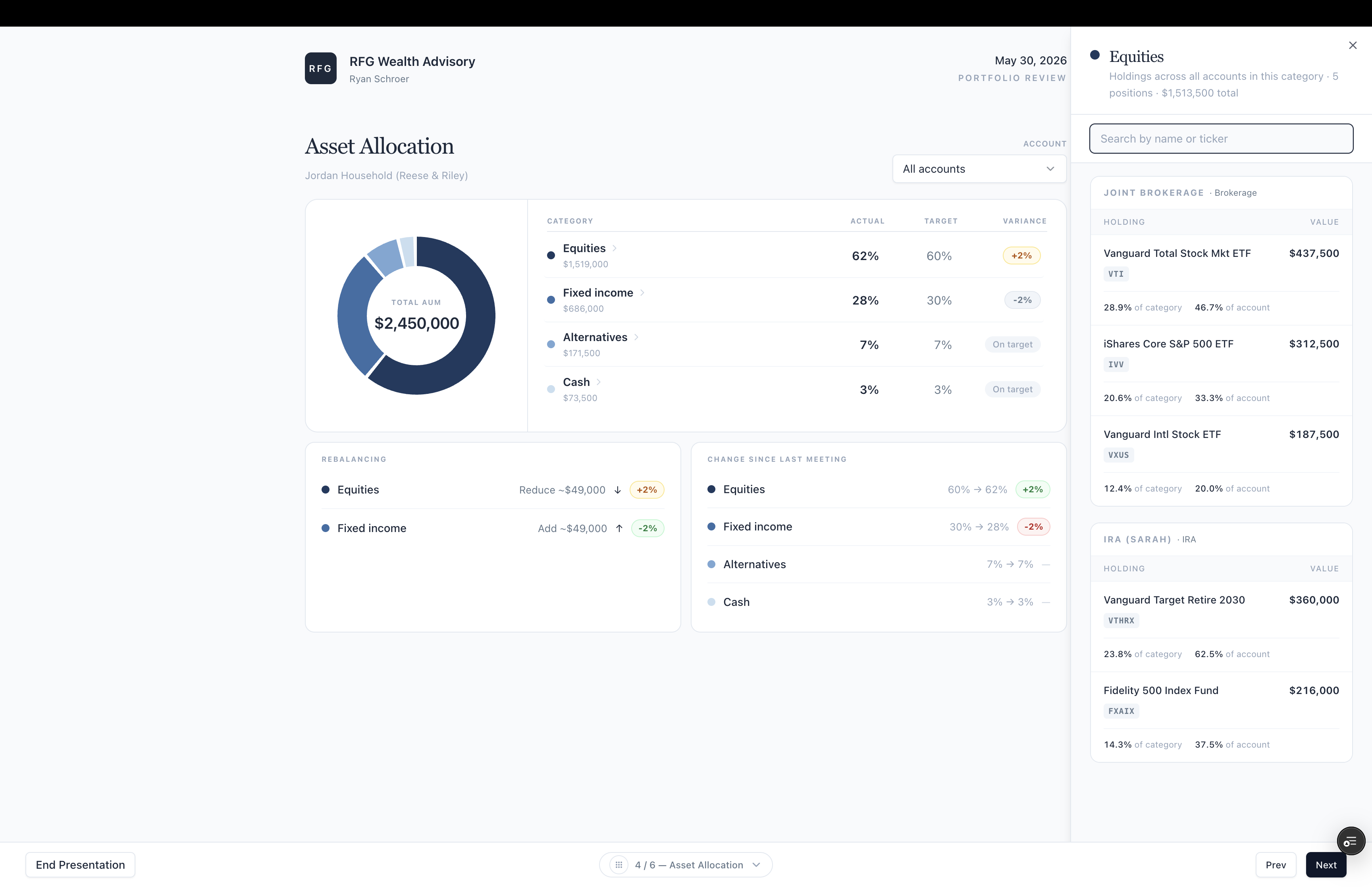
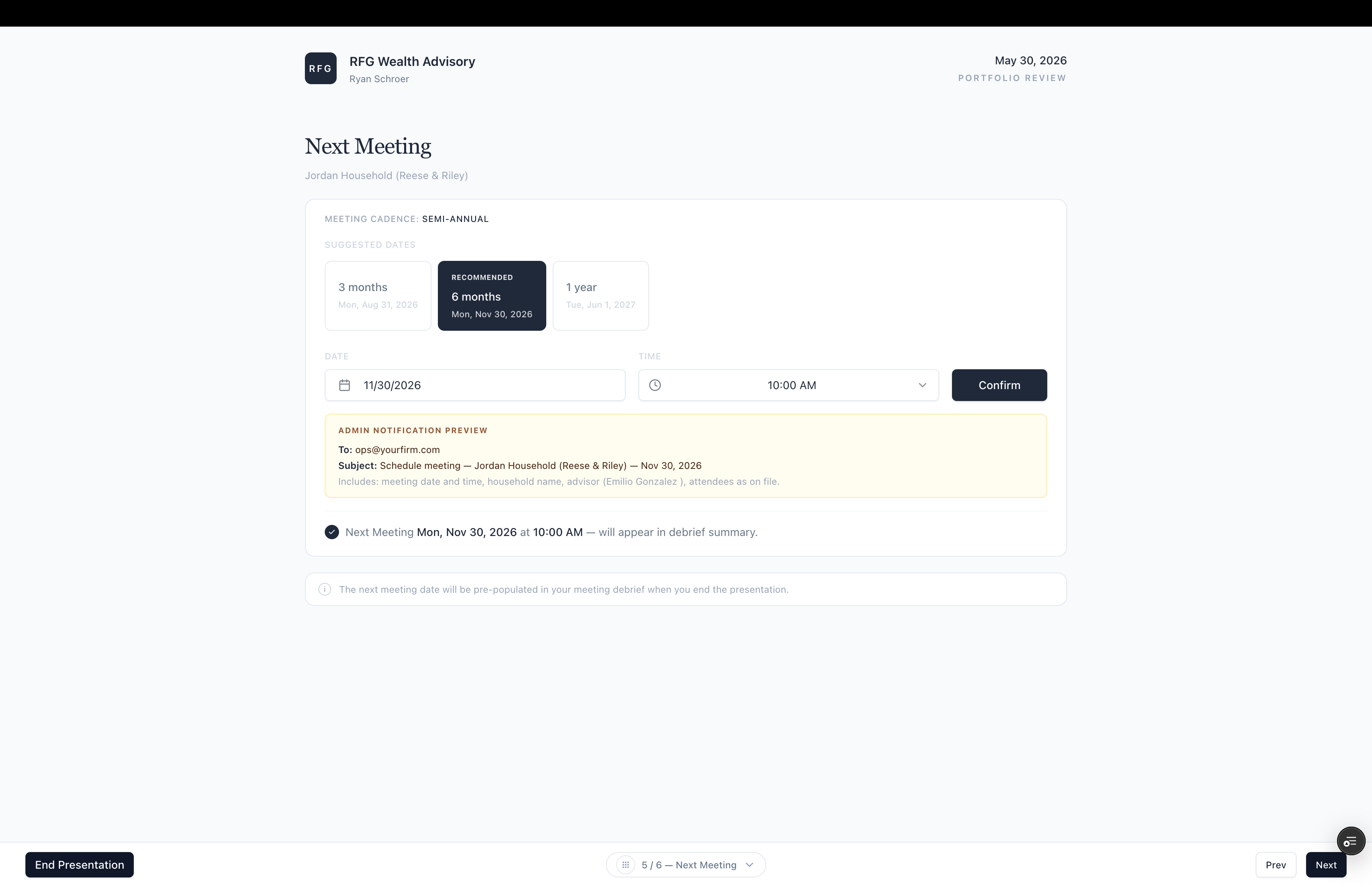
Advisors stopped preparing for the software. They started preparing for the conversation.
Meeting prep time dropped. But the more telling signal was behavioral: advisors stopped printing backup sheets. They stopped pre-loading browser tabs. Those workarounds were years in the making — habits built around a tool that couldn’t be trusted. Abandoning them wasn’t a small thing. It meant the tool had finally earned it.
Advisors reported spending less time managing the interface and more time reading the room. Client engagement improved. The tool disappeared — which is exactly what good design should do.